|
||||||
|
Slow Arts Actors activate text into life-forms. Using Poetry as an act of realignment. But when dealing with Hamlet, which text are we talking about? 1st Quarto – a gritty murder mystery 2nd Quarto – twice as many words and the most quotable First Folio – 77 more lines than Q2 Books are made by others Texts are made by authors
Lines: Say them, feel them, become them Thought leads to Speech accompanied by Action The Character’s thought is contained in the Text The Actor reveals the Dynamism of Sound in Text Animating its latent Energy Characters feel the Maximum they can and the Whole moves and informs You fly blind in Shakespeare like a Metal and a Magnet Lines determine what’s said the Space between them belongs to the Actors
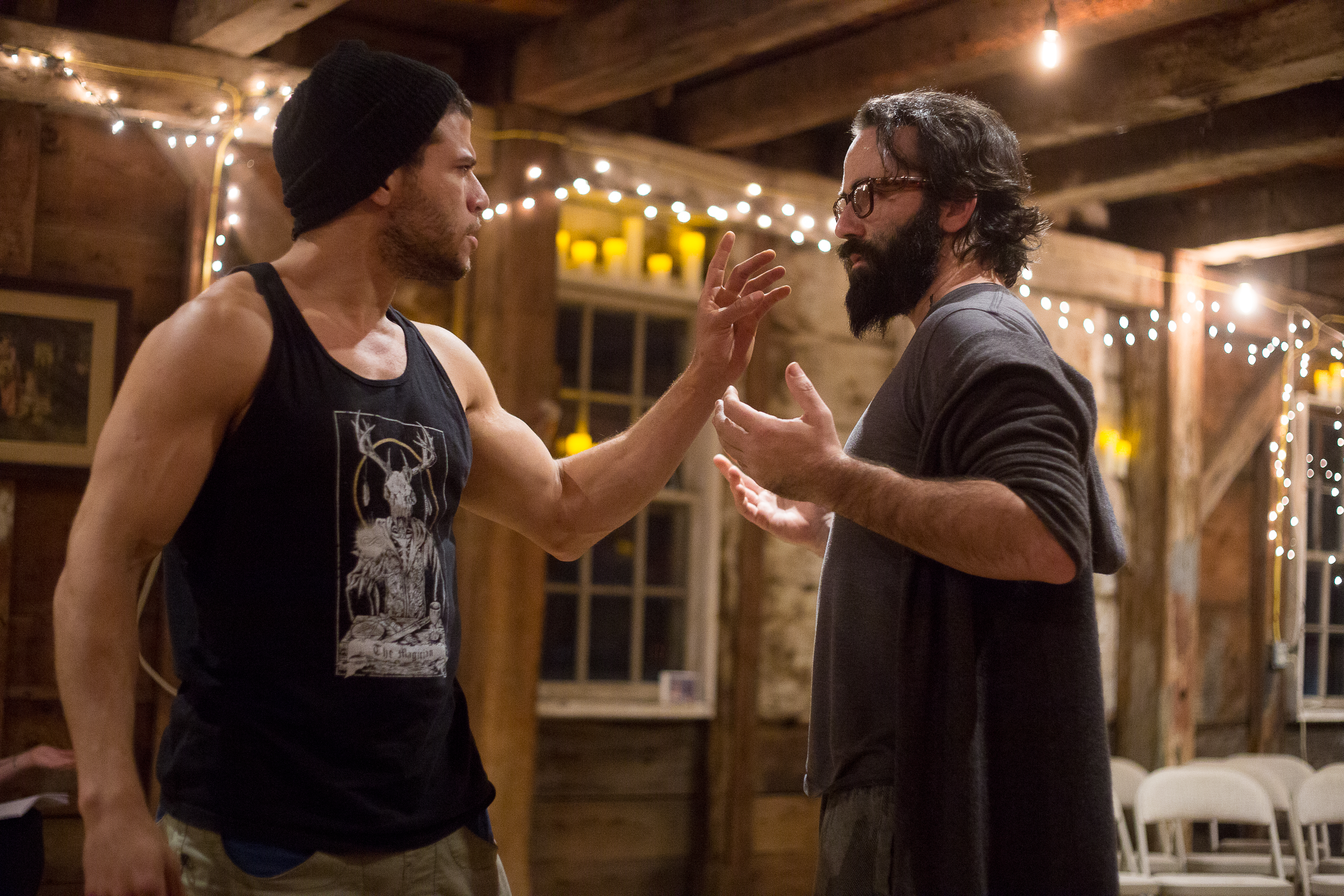
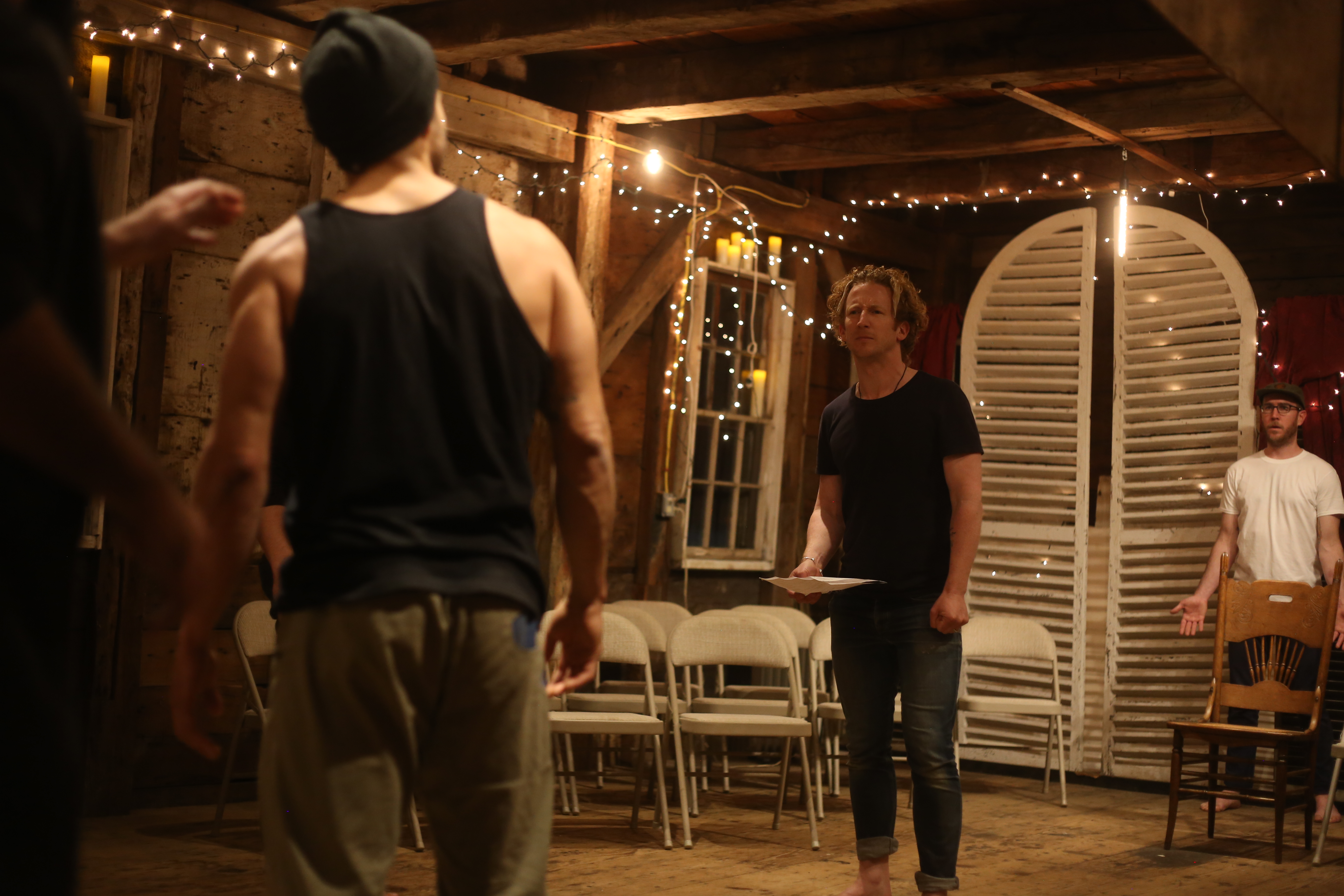
The Experiment:HAMLET in 4 days. And perform a premiere on the 5th day. Madness. Hold on the experiment goes further. 12 actors to do 34 characters total. 7 Main roles: King Claudius, Queen Gertrard, Prince Hamlet, Polonius, Laertes, Ophelia & Horatio all get their parts a month in advance. The cut being the ‘Dan Beaulieu’ special. Actor’s choices honoured (honored) from the get-go i.e. plead for lines cut to be reinstated, ask for someone to say that speech you don’t think fits your character etc. 5 Players: take on the other 17 or so roles left over in the cut. And they don’t start learning their lines until the first day of rehearsal. And then, they switch tracks every pass-through of the show. (A track is a given, or chosen, set of characters that can be played by one actor). A pass-through of the show could be either a line-run, or an on-your-feet (with minimal props) run of the cut of the play. There is no director, or blocking. And the actors all remain on the periphery of the action from beginning to end alongside the audience. Costumes are the clothes the actor wears, many actors are barefoot, (cue reader prejudice) and props change per pass-through (Ophelia’s herbs ranged from sticks to candles). And all this with a minimal budget, spent mostly on actor comforts (good housing & good food). Our visually-impaired Polonius, also happens to be an emeritus Shakespeare Prof with a penchant for Q1 Hamlet. My dependable Gertrude, his colleague at UNH. Our Hamlet a buff fellow from the Dominican Republic. Our Horatio a Clark Kent type from OH10. Our Laertes a clown & puppeteer implant Brit from Chicago. Our Ophelia an adorably-kooky waiflet from Oklahoma. And us, the King from Ham-sterdam. The FIVE Players: an observant DUMB clown a bearded madman who cut the script a ginger hunk a cerebral Brooklynite a jazz steeped ingenu All wanting to be in no other place than the space we were in; working towards a premiere pass-through of unknown proportions. It should be a train wreck. But the back end of any production is as important as the front end. Our stage manager was the humblest lovingest selfless type. Our general manager shuttled back and forth between NYC and Portsmouth holding down a job as well as on top of sponsors, publicity and audience co-ordination. The Puppeteering co-ordinated (rather nauseatingly in my case) by a Fens born redhead, who together with a little help from Laertes whipped 5 non-puppeteers into a fine frenzy. Fight directing was done by Superman. How can I help?The most operative phrase in this production had to be How can I help? Quickly followed by: Okay let’s do it, let’s make it happen etc… The CircleTrust and openness are words easily spoken and as easily sidelined. Each day we met, opened and closed with a circle. The circle was non-exclusive. Whoever had observed a pass-through was welcome to be part of and comment. There’s a Band of Brothers (and Sisters) aspect to any production, which can inhibit interaction with the outside world, or allow for bonding and inclusion of outside influence. GratefulGratefulness to be in the process poured from us all. Our process was observed by an MA student from Univ of Reno doing her theses on Original Pronunciation and the physiological changes that incurs. (Only the puppets spoke in OP). She became our book keeper and prompt up until premiere when she left us. She span out of the circle. And was replaced by nightly different audiences. LocationThe location for performance was an historic barn in Portsmouth NH and for accommodation at Mayfair House in Old York, MN: https://www.7stagesshakespeare.org/hamlet 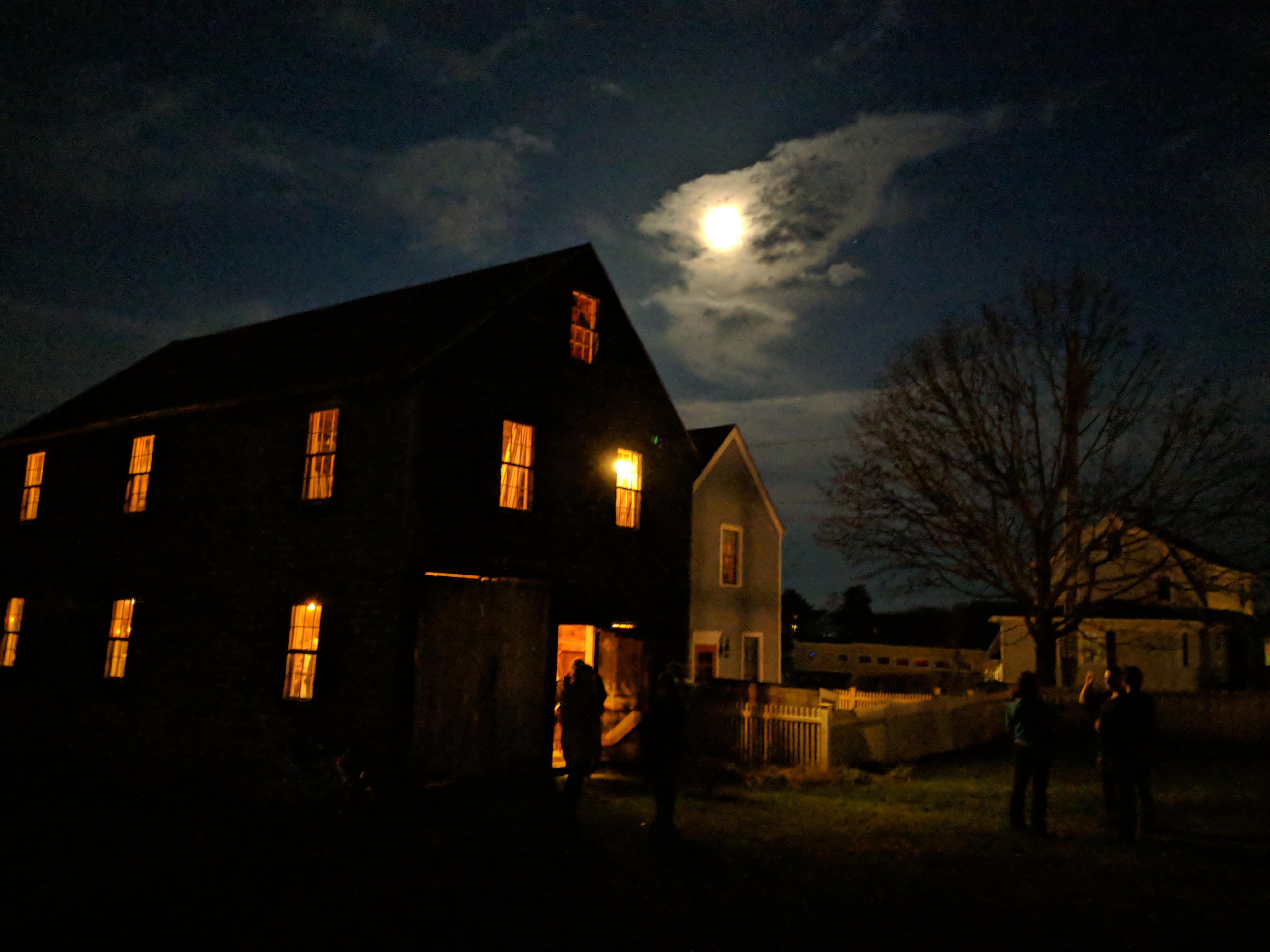 Photo by Clark Kent at intermission. tbc…
Guest Post by Francis Cox on Shakespeare in Italy:
Discovering Shakespeare in the pleasant garden of great Italy “So, what do we think ‘Titus Andronicus’ is about?” asked theatre director Lucy Bailey, kicking off the Shakespeare in Italy Summer School 2017 in Padua. ‘Titus Andronicus’ is one of Shakespeare’s most challenging plays, seething as it is with murder, madness, rape, mutilation, revenge and inadvertent cannibalism. To say nothing of its confusing timescale. But Lucy soon had us all on our feet, doing dramatic exercises and bringing the play to life. Hardly surprising since she directed a powerful production at London’s Globe Theatre, whose realistic stage effects had audience members fainting in the aisles. “I was there,” said a fellow course participant. “They were dropping like flies.”
Enticing and accessible A bit of background. I’m an actor who came to the profession late in life. I love Italy and Shakespeare, and I was getting tired of my usual summer holidays at one of the beach resorts that dot the vast Italian coastline. I wanted something different, and the two-week Shakespeare in Italy Summer School seemed to combine acting, the Bard and Italy in one enticing package. I was a little apprehensive about approaching this new adventure (Would my fellow students’ Shakespearean knowledge put mine to shame?), but the course was very accessible and Lucy Bailey got things off to a cracking start, so I immediately knew I’d made the right decision.
Impeccable credentials Shakespeare in Italy is the brainchild of husband and wife Julian Curry and Mary Chater who lived in Italy for many years. As former actors with the Royal Shakespeare Company, their aim is to create opportunities to explore the important influence of Italian culture on Shakespeare and his writing. With their RSC connections, they are able to attract illustrious ex-colleagues to act as tutors at the summer school.
A diverse, international group These boldface names in turn help draw participants from all over the world, ranging in age from 19 to 93. Some are actors, others are college or university students. The course also attracts adults with a lively interest in Italian Renaissance culture in general, and Shakespeare in particular. If you want to perform when scenes are “put on their feet” you can. If you don’t, you can observe and comment on the work in progress.
Exploring a challenging play John Nettles, star of long-running TV shows ‘Bergerac’ and ‘Midsomer Murders’, taught the second play of the course, ‘The Merchant of Venice.’ With its blatant anti-Semitism, ‘The Merchant of Venice’ is possibly more challenging to modern audiences than ‘Titus Andronicus’, and John explored this aspect of the play in admirable depth. As a bonus, he brought with him the lovely Jane Wymark who played his wife in ‘Midsomer Murders’. As an experienced drama teacher at London’s Guildhall School of Music and Drama, Jane led some wonderful exercises including a choral rendition of the moving “If you prick us do we not bleed” speech.
Well organized excursions In between each of the three plays we studied, there was a day off to explore the local region. We had excursions to nearby Venice and Verona, and on our last day, to the fabulous Scrovegni Chapel in Padua itself. These trips were very well organized thanks to Mary Chater’s diligence. I particularly appreciated her attention to detail when I landed at Venice Airport to join the course. Thanks to her comprehensive instructions about the locations of the ticket desk and the bus stop, I made the next bus to Padua shortly after I cleared customs.
A unique perspective on ‘Othello’ All this led up to the final play of the course, ‘Othello’ taught by actress and director Janet Suzman. Born in South Africa, Janet directed a landmark production of the play starring John Kani at Johannesburg’s Market Theatre in 1987. It was the first time a black actor had played the Moor in apartheid South Africa. With this unique perspective, Janet guided us through the text in her characteristic no-nonsense fashion. Along the way, she made frequent references to ‘Antony and Cleopatra’, in which she played one her greatest stage roles. We finished the course by watching a TV version of her groundbreaking production of ‘Othello’. Over 30 years later, it’s still compelling viewing.
Eager for more For me, the Shakespeare in Italy Summer School was an unforgettable experience and since returning to Amsterdam, I’ve been eagerly awaiting details of this year’s program. It’s just been announced that the 2018 summer school will run from Saturday 19 May to Saturday 2 June in Pizzo, Calabria. To my joy, Janet Suzman and Jane Wymark are returning to teach ‘Antony and Cleopatra’ and ‘Much Ado About Nothing’ respectively, while actor and director Michael Pennington will teach ‘The Winter’s Tale.’ I can’t wait.
For more information visit Shakespeare in Italy Naming Will in the (1st 126) Sonnets: 6.5+6 That use is not forbidden usury, Which happies those that pay the willing loan; 22.10+11 As I not for my self, but for thee will, Bearing thy heart which I will keep so chary, 26.7+8 But that I hope some good conceit In thy soul’s thought (all naked) will bestow it: 40.7+8 if thou this self deceivest, By wilful taste of what thy self refusest. 51.13+14 Since from thee going he went wilful slow, Towards thee I’ll run, 57.13+14 So true a fool is love, that in your Will, (Though you do anything) he thinks no(w) ill. 58.9 you your self may privilege your time to what you will, 58.14 Not blame your pleasure be it ill or well. 72.7+8 And hang more praise upon deceased I, Than niggard truth would willingly impart: 80.7+8 My saucy bark (inferior far to his) On your broad main doth wilfully appear. 81.3+4 From hence your memory death cannot take, Although in me each part will be forgotten. 88.8+9 That hou in losing me, shalt win much glory: And I by this will be a gainer too, 88.13+14 Such is my love, to thee I so belong, That for thy right, my self will bear all wrong. 89.5 Thou canst not love disgrace me half so (w) ill, 89.7+8 As I’ll myself disgrace, knowing thy will, I will acquaintance strangle 111.9 Whilst like a willing patient I will drink, 112.3+4 For what care I who calls me well or ill, So you o’er-green my bad, 117.9 Book both my wilfulness and errors down, 123.13+14 This I do vow and this shall ever be, I will be true despite thy scythe and thee. All sonnets can be seen and heard at Sonnet Mainpage ILuvSh!
#154Sonnets1min We did it. We being Homepage Shakespeare Dallas in the AT&T Wyley Theater on May 28th, 2017. So Shakes Dallas had a 5 year plan to complete the oeuvre of WS. The final read-through consisted of 154 Sonnets. And Yours Truly got the job of hosting them. As incidental Shakespeare events go this takes the biscuit. I mean you spend years memorising the sonnets and then someone asks if you can host a Sonnet marathon? There are other candidates. I know of a handful of us who do this. So rained off the plaza Sonnet 18 Dallas mic check We headed inside and over the next 4 hours, 80+ actors and actresses and stage managers and artistic directors and front of house and back office read sonnets: 1-51 And to finish it off we handed out 154 sonnets to the audience and did all 154 in 1 minute. My heartfelt thanks to EVERYONE involved that day. How now, Sir William! whither were you sent? Whither go you, George? Whither and thither indeed. We’ll to Sutton Co’fil’ tonight.
My fore-past proofs, howe’er the matter fall, What fears stop the achieving of dreams?
We will. Postscript:My middle middle-name’s Cuthbert. He talked of Bertram and Hubert and Robert. If he knew St Lambert, Relationships. Like it or not, we are born into a relationship with Shakespeare. He exists as a brand for Stratford upon Avon, his birthplace. He decorated a credit card and that guy/meme is on twitter and fb. He adorns trinkets and mugs and cushions and rubber ducks to open your purse strings. Many are his, by imbuing his plays and poems with life and embodying his characters. Some of his characters are almost persons in their own right: His historical characters that lived and breathed, he gave a new life: Their stories that he wrote are not their histories. The genres he used, Comedies, Histories, Tragedies, and Romances His play ‘The Merry Wives of Windsor’ an early Farce. But the central piece of the puzzle in our relationship remains his characters. Our New direction with SHAOKE focuses on the characters. The basis of a great relationship is showing up and putting up. A month ago feels like a fleeting year since playing Henslowe and improvising in Original Pronunciation. Grace Iopollo’s lecture-performance (with actor reading) told us about Edward Alleyne who forced a change in Henslowe’s Will the day before he died. He could barely hold the quill. A bunch of witnesses all swore he was in his right mind. He started the Probate process of the Will the day after. A sunday nota bene. There was a lot at stake. For example, Dulwich College would not exist without it. (mind you his own diversified portfolio was substantial in and of itself). Alleyne’s consolidating his assets with Henslowe’s, literally funded the College. Quelle geste! as Cyrano might say. A selfless gesture he needn’t have made. Why did he? Alleyne’s wife was Henslowe’s step-daughter. Henslowe’s relatives by birth or marriage missed out on some nice pieces of pie as a result. History isn’t always based on virtuous results. Even if the results are virtuous. Conspiracy anyone? Speaking of which. The FB Group of this BLOG finds me defending the man from Stratford once again in a most contradictory way. Because i say, the authorship question (SAQ) doesn’t matter as we have the extant plays and poems written by whoever. Yet whenever the Authorship enthusiasts put up a website or post comments: there i am, defending and arguing. i’m not alone. There is a website devoted to it called OXFRAUD. We, the members of Oxfraud on fb, rebut the newest arguments and various fallacies many individuals bring to the game. Hooligans or SupportersThis has as much to do with enjoying Shakespeare as football hooligan firms do to football. And is frowned upon as much by virtually every University, College and School on the planet with a minority of exceptions. The main players in the SAQ tried for over 150 years to legitimise their claims. (they will tell you since Rev Wilmot in the 18thC). The online world of the 21stC provides them with a platform. The problem is after thorough ad hominem bashings in the various forums, they retreated into secret groups on fb and troll the news looking for new comment threads. They proselytise amongst each other and are active with blogs and websites. And self-published books. Not that that’s bad.Sonnet Book by WS. Their latest champion Ros Barber. Each month she adds more words to her e-book thesis, i.e. smashing what is known and held as evidence about Shakespeare in order to pave the way for some other. (she wrote a book about Marlowe, so presumably he her man). Agreement?The one and only thing the other team agrees on is that it wasn’t Shakspere of Stratford (spelling and place vilified and scorned) who wrote the plays and poems attributed to him. They conclude that all evidence for him is flawed and biased, or an incomplete narrative. The other side aren’t stupid btw. They number a handful of judges and an astro-physicist, a psychiatrist, and an ex-CIA guy. Some are extremely knowledgeable about the Early Modern period. Others not so, and they simply swallow the kool-aid the wiser sort hand them. Ovine or Bovine?But then that’s exactly what they say i am doing. I am either a sheep or a cow who definitely cannot think for myself. Enthralled to the Stratford tourist industry headed by the Shakespeare Birthplace Trust, who they believe keeps us on their payroll. This belief is becoming widespread thanks to the web. My stomach hurts from laughing at the improbability of this ever having happened or happening. And yet it’s still believed. Ros for example is being assisted by her organisation, so why not? Except it isn’t. Full disclosure: i have been paid to perform at the SBT for their members. And i count Stanley and Paul as friends. But i certainly don’t need to fight their battles for them. i also attended the Shakespeare Institute and i love scholarship. The other side often claim : Get Shakespeare wrong and you get the whole Elizabethan era wrong. Hear, hear. Boy o boy are they wrong. Because if you follow their logic, then all scholarship on Shakespeare for the last 400 years is wrong. But that leaves the inconsistencies they bring to the feast. There are enough websites that state the historical case for Stratford man and London theatrical playwright and poet William Shakespeare. Fortunately original documents and source reading materials are becoming more accessible. Try this: Remember Shakespeare was an infinitesimal speck of worth in his own times. The historical record preserved this much. And yes it has been questioned every step of the way. Scholars barely agree as it is. Caveat emptor. Buyer Beware.Having spent far too much time researching and arguing this subject, i now condemn it as regularly as i can. Starting with the magnum Opus by Charlton Ogburn senior and his wife Dorothy moving on to Mark Anderson and his SBAN down to Diana Price and her biased writer’s trail, i can honestly say i hate this subject. Not because they’re right. Because each new website, author, pundit, whatever; makes the whole argument like Groundhog Day. Now i feel i should make a Prospero-like gesture and bury my wrath and antagonism some five fathom deep. But i can’t. There is one other thing we all do agree on and that is the quality and sublimity of the content in the plays and poems. Keep repeating this mantra: The Shakespeare Authorship Question doesn’t factor into the works at all. But judge for yourselves if you think it does. Just remember the way out of an argument about the SAQ is to remind the person shoving your ignorance down your throat that it just doesn’t matter if you are performing the plays or reading them. Do i contradict myself? And Henslowe at the SWP?What a joy to be able to concentrate on someone who spans the entire theatrical period contemporary with all the Elizabethan and Jacobean playwrights, poets, actors, and theatre owners slash entrepreneurs and not to have anything at all to do with that much-maligned and over-publicised pax vobiscum Shakespeare 400 -So far the fear in this Shakespeare Year has abated, to be replaced with baited breath. This year is Shakespeare 400 and my contributions so far are small and insignificant to the whole. Yet giant and most most fulfilling to those i shared them with. My thanks to Ben Crystal are legion for the opportunities to explore with the Passion in Practice ensemble. LIST of W.S.’ W.Sh. relished events this year so far
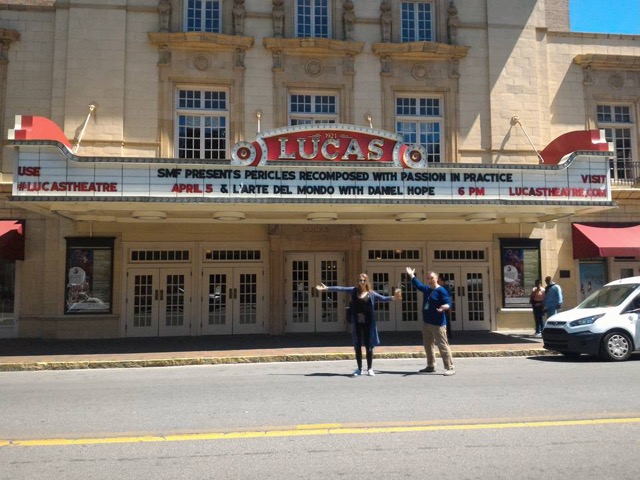
* Leadership Workshop for the Algemene Bestuurs Dienst, Ministerie van Binnenlandse Zaken, Den Haag. Put together by Henriette Koomans. My Richard and Buckingham ‘you were never wont to be so dull’ scene went down well with the Cream of the Crop bureaucrats. * Lunchpause Shakespeare Karaoke Lunchpause Website. Hosted at Effectory, showed that even a 30 minute session revives workers and increases their afternoon potential. * Savannah Music Festival: Pericles Recomposed. April 5th, Savannah, Georgia, USA.
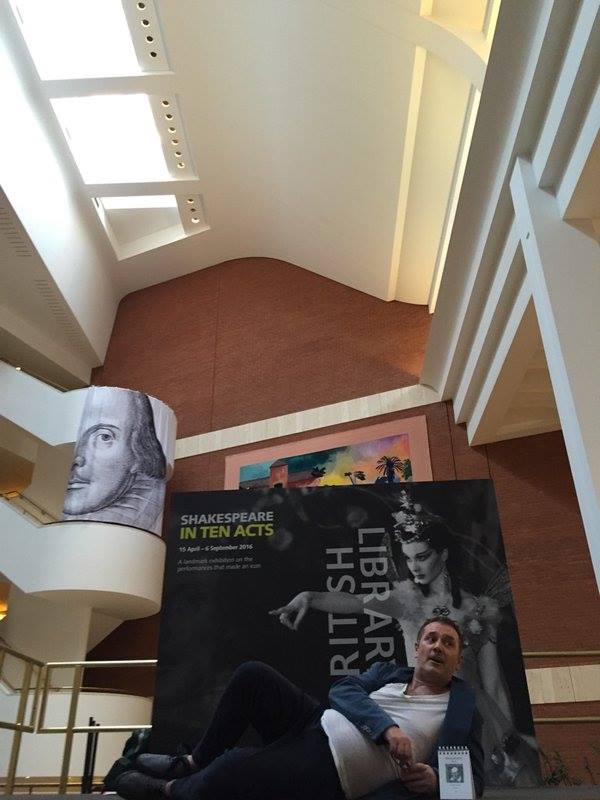
* Shakespeare Karaoke show April 23rd: British Library, London.
* Played Philip Henslowe in a devised piece May 26th, Sam Wanamaker Playhouse, the Globe, London. Henslowe400, Henslowe too died in 1616. Ben asked if i could be him and over a 8 day period; saw Grace Ioppolo’s Henslowe’s Will at the SWP. Then attended the Henslowe symposium that weekend. (Thanks Globe Ed)! Read the entire diary in OP in 2 days. Devised a script with Marie Fortune and improvised with David Crystal and PiP members Jenni, Matt, Marie, Ben, before improvising in OP as Henslowe. The Dulwich College folk were happy so that makes me happy.
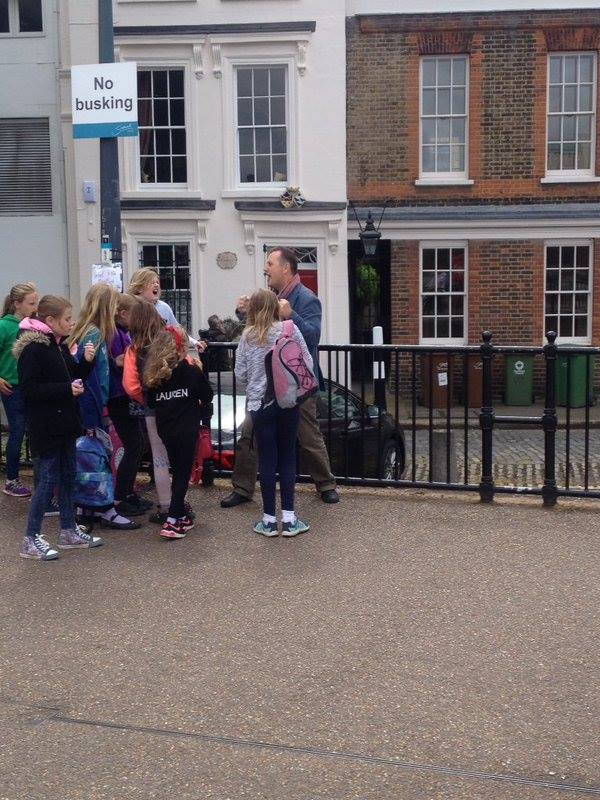
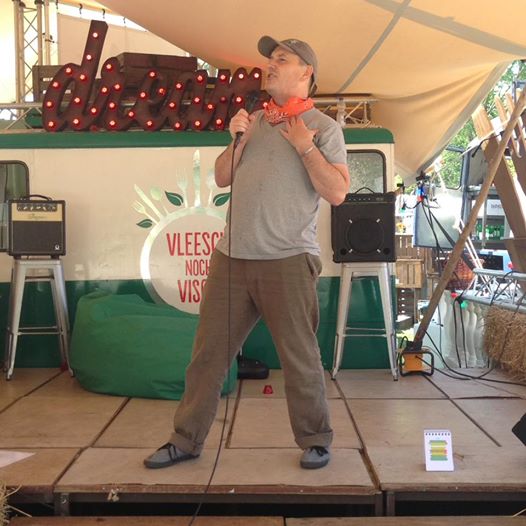
I wish that were true. I’m at my best when i have a bunch of shows lined up and all i have to do is prepare for each of those in their own special place where they happen. The understanding that your crowd in Savannah will not be that of Amsterdam or London. And big scale or small scale up to 300 seats is where you learn the most. Whether NOT busking the 14th Sonnet Marathon on the Bankside and Or lounging in the lobby of the British Library This year isn’t over yet. What’s gone… *14 Sonnet Marathons SO FAR: Started in Amsterdam in January. Deciding, hey 52 Sonnet Marathons would be cool. People do stand out of your sight-line, ‘my adder’s sense…’ Stop the thoughts. *Rollende Keukens in the Westerpark Flexitarian Vleesch noch Visch stand up sonnetry Focus on the words again for heaven’s sake, There’s an arc and the story’s meagre curve demands to be kept. Amongst these Shakespeare related events This sonnet was recorded on the fly. Shot by Maarten Toner. Sonnet 104 from Maarten Toner on Vimeo. |
Look and Listen to OthersOnline Works of Shakespeare
Play SchoolRenaissance School
Scholarly Renaissance-related blogsShakespeare Blogs
Shakespeare Institutions
Shakespeare or SOMEONE ELSE?
Sonnet School
|
|||||
|
Copyright © 2024 I Love Shakespeare - All Rights Reserved Powered by WordPress & Atahualpa |
||||||